One of the earliest signs of reduced physiologic reserve is not fatigue during effort—it’s fatigue after effort.
Many adults notice:
- workouts that leave them sore for days
- travel that takes longer to recover from
- illness that lingers
- late nights that take days to shake off
- emotional stress that sticks longer than it used to
If you’re experiencing slow recovery after workout or daily stress, it’s rarely just age—it’s about physiologic capacity.
What Recovery Actually Requires
Recovery is an active biologic process.
After stress, your body must:
- repair tissue
- restore energy (ATP)
- rebalance hormones
- clear inflammation
- reset the nervous system
- stabilize glucose
When these systems are supported, recovery is efficient. When they’re strained, recovery slows.
Mitochondrial Function and Recovery
Mitochondria drive energy production and repair.
They are responsible for:
- producing energy
- regulating oxidative stress
- supporting tissue repair
- signaling adaptation
When mitochondrial efficiency declines:
- recovery takes longer
- fatigue increases
- performance drops
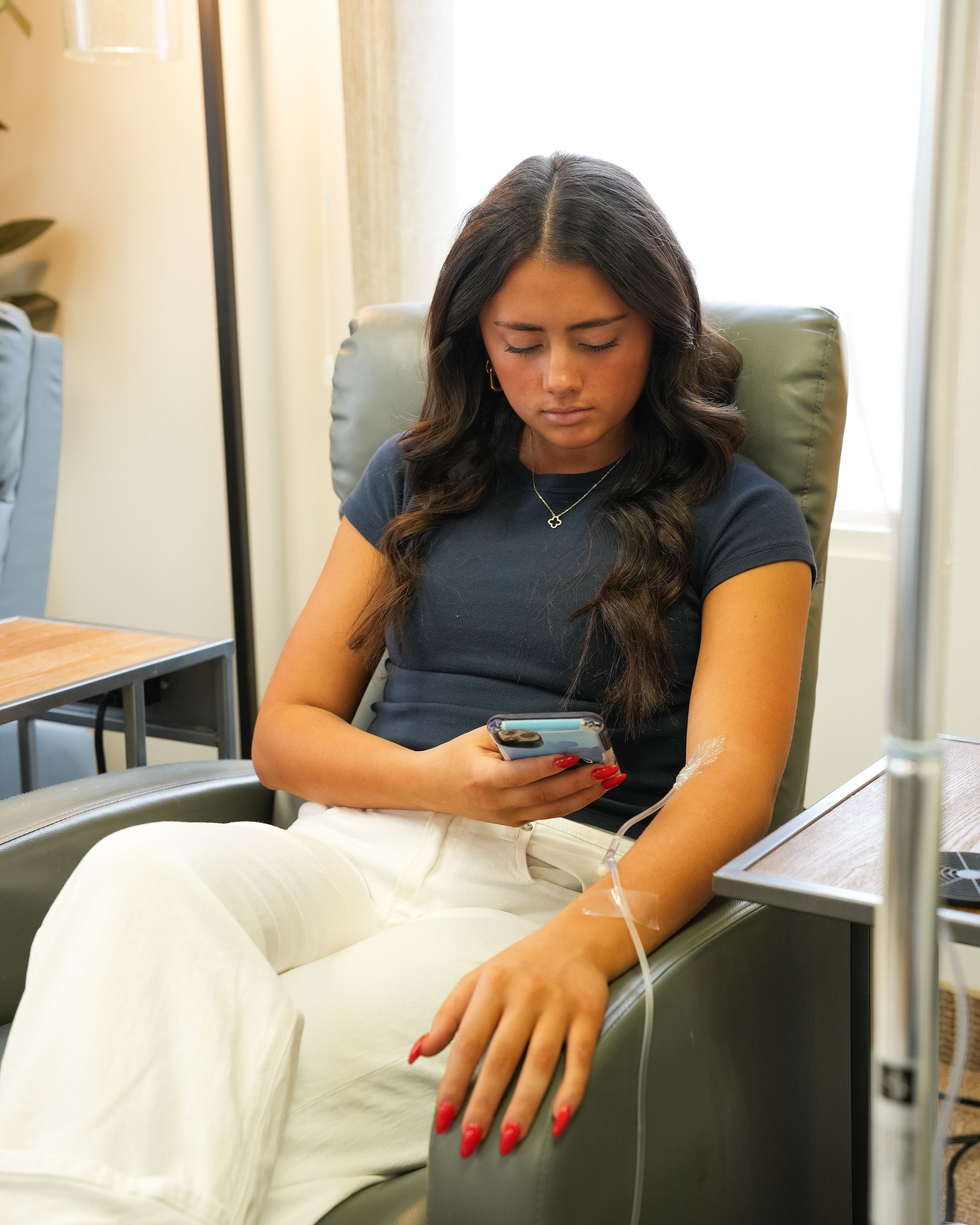
Supporting recovery at the cellular level through approaches like IV therapy & hydration can help improve energy production and repair capacity.
Inflammation and Recovery
Inflammation is necessary for recovery—but it must resolve.
When baseline inflammation is elevated:
- soreness lingers
- joints feel stiff
- fatigue persists
- recovery slows
According to research from the National Institutes of Health on exercise recovery and inflammation, proper regulation of inflammation is essential for muscle repair and recovery after physical stress.
Cortisol and Recovery Suppression
Cortisol helps during stress—but chronic elevation impairs recovery.
It can:
- reduce muscle repair
- disrupt sleep
- impair hormone balance
- increase fatigue
This is a major contributor to slow recovery after workout.
Sleep as the Recovery Window
Deep sleep is when most recovery happens.
It supports:
- muscle repair
- hormone release
- immune function
- nervous system reset
When sleep is shallow or fragmented:
- recovery slows
- fatigue increases
- performance declines
Even with enough hours, poor sleep quality limits recovery.
Glucose Stability and Repair
After exercise, the body needs stable glucose to repair and replenish.
When insulin signaling is disrupted:
- recovery slows
- inflammation increases
- fatigue lingers
This is why metabolic health plays a major role in slow recovery after workout.
Muscle Mass and Recovery Capacity
Muscle helps regulate:
- glucose
- inflammation
- energy production
As muscle mass declines:
- recovery slows
- fatigue increases
- resilience decreases
Maintaining muscle is essential for recovery.
Nervous System Reset
Recovery requires shifting from:
- activation (stress mode)
to - recovery (repair mode)
If the body stays in a stressed state:
- recovery is incomplete
- sleep is disrupted
- energy remains low
Hormonal Transitions and Recovery
Hormones influence how your body repairs and adapts.
In women:
- estrogen supports muscle repair and recovery
In men:
- testosterone supports strength, recovery, and energy
Supporting hormone balance through approaches like bioidentical hormone therapy can help improve recovery and overall resilience.
Why Pushing Harder Backfires
Many people respond to slow recovery after workout by:
- training harder
- increasing intensity
- pushing through fatigue
This can:
- increase cortisol
- worsen inflammation
- reduce recovery capacity
Recovery requires support—not just effort.
A Better Question
Instead of asking:
“Why am I getting older?”
Ask:
“What is limiting my recovery capacity?”
Because recovery is driven by physiology—not age alone.
What Improves Recovery Speed
To improve recovery:
- support mitochondrial function
- reduce inflammation
- improve sleep quality
- stabilize glucose
- balance hormones
- restore nervous system balance
When these improve, people often notice:
- less soreness
- faster recovery
- improved energy
- better performance
The Takeaway
Slow recovery after workout is not just about aging.
It often reflects:
- reduced cellular energy
- elevated inflammation
- poor sleep quality
- hormone imbalance
- metabolic dysfunction
When these systems are addressed, recovery improves.